
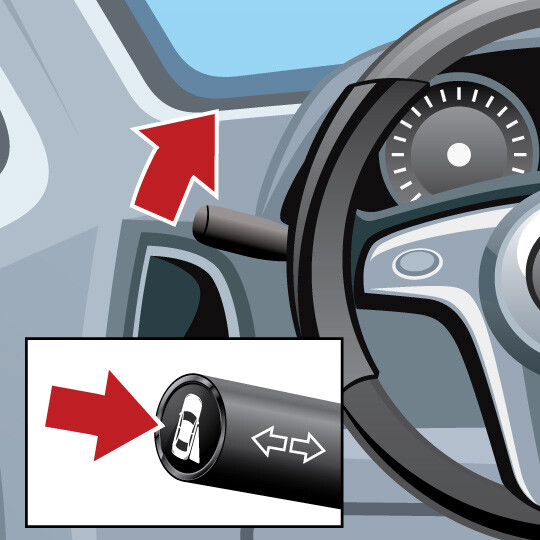
1. Activate
Turn this feature on by using the turn signal or pressing a button on the turn signal lever.
Self-driving Cars and the Future of Transportation.
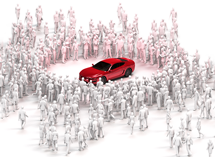
The leap to owning a fully automated vehicle will not be like the leap from horse and buggies to “tin lizzies.”
Many estimates predict that we will see fully automated vehicles in the next couple of years. But whether the average person will be able to afford one or want to drive one is another question.
The likely first purchasers of these vehicles may be fleet operators that buy vehicles in bulk quantity. A car rental company might, for example, have “geo-fenced” cars that might serve the metropolitan area around an airport and go no farther.
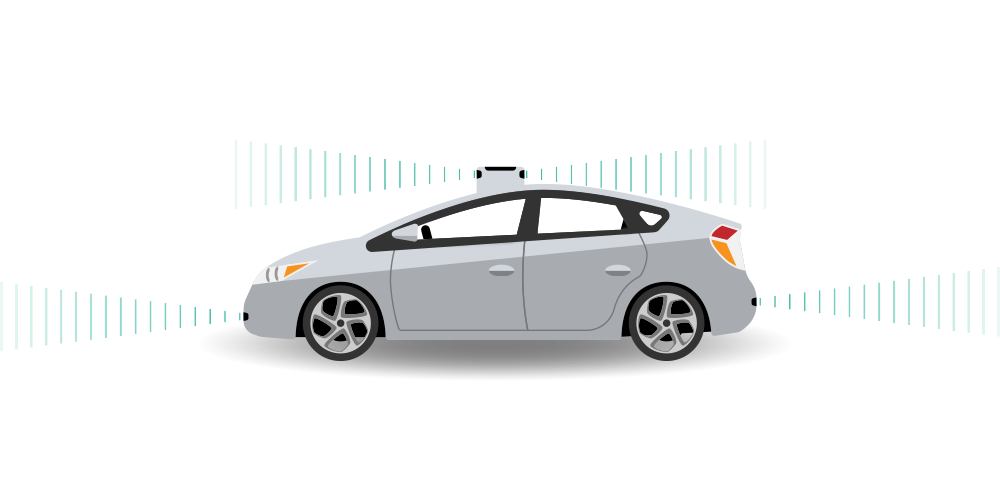
Rideshare companies such as Uber are already experimenting with fully automated vehicles and may render that chatty, affable driver a thing of the past.
In this article, we look at some of the resistance to assistive technologies that may exist.
Recent surveys show that the majority of people have concerns about the safety of self-driving cars, ranging from moderately concerned to downright frightened.
There are few who say they have complete confidence in fully automated vehicles.
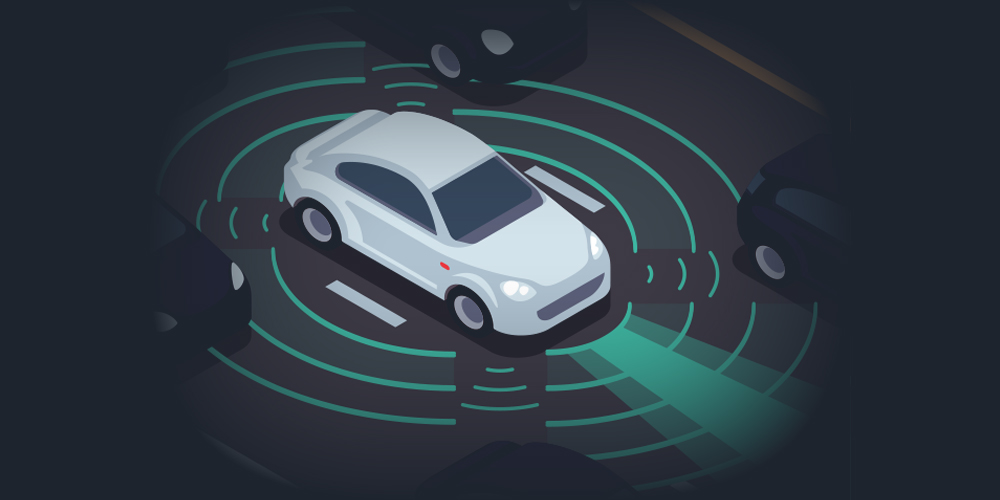
According to a survey conducted by AAA, three quarters of U.S. drivers would be afraid to drive in a fully automated car. AAA’s survey said that women and people over age 55 fear it the most.
A University of Michigan study showed that, “In comparison to the respondents in the U.K. and Australia, respondents in the U.S. expressed greater concern about riding in self-driving vehicles, data privacy, interacting with non-self-driving vehicles, self-driving vehicles not driving as well as human drivers in general, and riding in a self-driving vehicle with no driver controls available.”
Is resistance futile? According to some projections, fully automated cars will be common in 20 years. In a controlled experiment, a partially automated beer truck made a delivery without a driver behind the wheel for the highway portion of the trip. Once the beer truck entered the city, a truck driver took over driving duties.
But will fully automated cars erode the aspirational driver experience on which so much of car marketing is based? There was a scare a few years back when a University of Michigan study showed that fewer younger people were getting licenses. Fewer drivers mean fewer car purchases. But that proved to be a temporary phenomenon as millennials were second only to boomers with 4 million cars purchased in 2015.
Whether or not America’s love affair with the automobile is the product of strong marketing, the next generation of drivers may be more concerned about what they can do with the extra time they’d have if they don’t have to pay attention to the road.

The conventional wisdom has been that younger consumers are more comfortable with new technology. A study by Volkswagen in Germany showed that people quickly became more comfortable with “robot cars” after they had a chance to spend some time in one.
So barring a calamity, people eventually may embrace assistive technologies. And even those people who simply like to drive will breathe a sigh of relief knowing that they can take the wheel anytime they like. However, our notion of who is driving whom becomes more in question in highly automated vehicles.
So here are some of the questions that drivers are asking and engineers are attempting to answer:
Can a fully automated vehicle be hacked?
Right now? Yes. It has been demonstrated that the sensors on even the most advanced assistive technology-equipped vehicles can be fooled cheaply and readily by a motivated tinkerer. Recently, two “white-hat hackers” (professionals who hack to expose weaknesses) took complete control of a Jeep Cherokee’s UConnect System, “which controls everything from the navigation system to a driver’s ability to make calls.” Although the car manufacturer addressed the vulnerabilities, this could become a greater problem as more vehicles have outside digital connections.
What about getting personal information about me from my fully automated car?
While the fully automated car will know your home and work locations, credit card information and recent locations, it may not be able to share that information with a hacker if it isn’t online.
Will I need a license for a fully automated vehicle?
Yes. Under current regulations, highly automated vehicles still require a human driver to be at the ready. So, we’re still a long way from piling a group of children into a fully automated vehicle and sending them off to a little league game. It is unclear, at this point, if the vehicle itself, will require a license. Stay tuned…
Will I need insurance?
If regulations of fully automated cars in the future require a human driver to be present, he or she will probably need insurance. Furthermore, as seen in the case of a fatal Tesla crash, a driver can still be at fault even though the partially automated vehicle was doing the driving. But the good news is that your insurance rates should go down and as collisions decrease.
Fully automated cars present a legal dilemma for the insurance industry and manufacturers, according to a paper by Bryant Walker-Smith. The safer a car is, the more it will cost to manufacture and insure. On the other hand, fully automated vehicles should reduce the number of collisions and the costs to insurance companies.
Will my fully automated vehicle be able to communicate with other fully automated vehicles?
V2V, or vehicle to vehicle communication, will help to relay information about traffic jams or obstacles to other vehicles, possibly making traffic flow more efficiently. V2I, or vehicle-to-infrastructure systems, can allow cars to speak to traffic lights, for example, in order to know when the light is going to change. Of course, in a future with a mix of vehicles, there will be the wild card of the unpredictable or reckless driver.
Is there any kind of redundancy in the vehicle’s sensors?
Yes. One example: the fully automated car Uber is testing has 20 cameras and multiple radar sensors to “see” in every direction around the vehicle. The sensor technology includes LIDAR, radar and cameras. This should provide some relief to those who worry that a stray piece of gravel on the highway might knock out a sensor.
Content Source: MyCarDoesWhat.org
How will automation protect vehicle occupants?
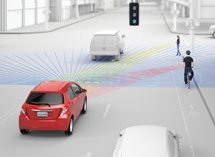
The ultimate safety benefit of advanced driver assistance systems (ADAS) is simple: Lives will be saved, injuries will be prevented and lessened, and crashes will be reduced. As many as 40,000 people died on U.S. roadways in 2016 alone, according to preliminary data from the National Safety Council. Approximately 94 percent of those deaths were the result of human error. Improved technology means opportunities for human error will continue to decrease, thus saving lives and preventing injuries.
How exactly will ADAS technologies improve safety? The answer depends on the specific system, but vehicle safety technologies serve three primary functions:

Systems that aid drivers include back-up cameras and adaptive headlights. These features improve visibility for drivers and show hazards in otherwise hard-to-see areas around a vehicle. The images are captured by cameras and sensors. These technologies already exist in many vehicles and soon will be a standard feature on all cars.

Warning Features do just that: Warn the driver about hazards that might be in their path. Examples include forward collision warning, lane departure warning, blind spot detection and drowsy driver detection systems. Warnings are relayed to drivers through audible alerts or vibrations. Hazards are most often detected through the use of cameras and radar sensors.
Assist technologies take on a more active role to help the driver. Some of the assist features include automatic emergency braking, lane keeping assist, adaptive cruise control (a version of cruise control that maintains your speed and set following distance) and automatic parallel or perpendicular parking. Cameras and radar sensors all help make these technologies possible. However, it is important to note that these features do not replace the role of the person behind the wheel. An attentive, defensive driver remains a necessary component of all vehicles featuring ADAS technologies.
A study published in 2016 in the journal Accident Analysis and Prevention says the safety benefits of ADAS technologies will be significant. Researchers determined that if every car were equipped with blind-spot monitoring, lane departure warnings and forward collision warnings, the technologies “could prevent or reduce the severity of as many as 1.3 million crashes annually, including 133,000 injury crashes and 10,100 fatal crashes.” Drivers whose vehicles have ADAS technology stand to benefit from improved visibility, better advance warnings, the ability for a vehicle to take control in an emergency situation, and more comprehensive tools for driving in bad weather or poor road conditions. The Insurance Institute for Highway Safety also expects significant safety benefits because of ADAS technologies. An IIHS study from 2016 found that back-up cameras reduced backing crashes by 16 percent and particularly benefited drivers age 70 and older.
Content Source: MyCarDoesWhat.org
Safety technologies exist, but attentive drivers still necessary

Many ADAS technologies are here right now, and they exist in everyday, affordable cars on the market. However, it is important to remember that today’s technologies are assistive and cannot be considered as a safe replacement for a human driver. There is no fully automated vehicle on the road today that members of the public can drive – even those in testing have safety drivers that may take over. At least for now, fully automated vehicles remain in the testing stage confined to specific environments.
Much more common today are systems that watch out for you. That means you can drive a car with ADAS features that help keep you in your lane (e.g., lane keeping assist), forward collision warning or automatic emergency braking that help prevent rear-end collisions. These technologies exist to assist you, so you must be an alert, attentive driver whenever you are on the road.
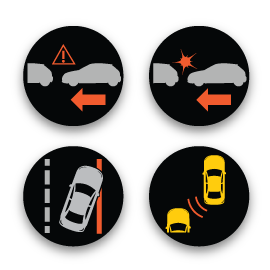 Not all advanced vehicle safety technologies are created equal.
Some ADAS features provide a greater safety benefit than others. The most valuable technologies include automatic emergency braking, forward collision warning, lane departure warning, blind spot warning and adaptive headlights, according to an analysis from the Insurance Institute for Highway Safety. If those four features existed in every car, more than 10,000 lives could be saved and almost 150,000 injuries could be prevented every year, the organization states.
Car manufacturers implement safety technologies in different ways. They also name these technologies differently. For instance, the driver of one vehicle brand might know automatic emergency braking technology as “Forward Emergency Braking.” But a driver of another vehicle brand might know the technology as a “Collision Mitigation Braking System.” Likewise, dashboard icons for the same function may differ depending on the car.
Both the Society of Automotive Engineers and the National Highway Traffic Safety Administration provide standards and regulations with regard to auto safety.
Vehicle safety technology: Through the years
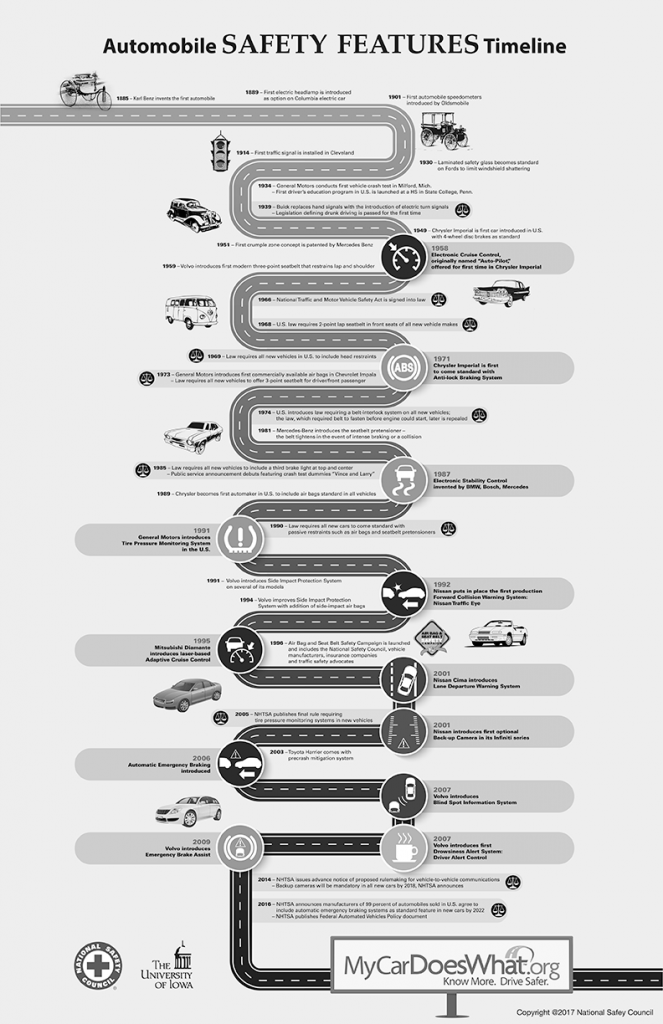
Download a PDF of the Safety Features Timeline
Content Source: MyCarDoesWhat.org
Test cities for automated vehicles… coming to a town near you?
—Consumer Reports April 2017
From Arizona to Massachusetts, the move toward fully automated vehicles is picking up speed. Since 2012, no fewer than 41 states and the District of Columbia have considered laws pertaining to fully automated vehicles on roadways. At least 13 states have ratified some sort of legislation:
Alabama, Arkansas, California, Florida, Louisiana, Michigan, New York, Nevada, North Dakota, Pennsylvania, Tennessee, Utah and Virginia—and Washington D.C.
Governors in Massachusetts and Arizona have issued executive orders encouraging testing on their roads with extensive programs already underway.
Why are states so interested? Are fully automated vehicles going viral? Politicians, researchers and business leaders hope to earn the mantle of “early adopter” attracting research and investment to their region. It could put them on the map. Another major motivator is reducing crashes and traffic deaths:
For a worldwide map of autonomous vehicle test cities, visit https://avsincities.bloomberg.org/.
If any place could be crowned the birthplace of “automated vehicles,” it would be Silicon Valley in California. Home to Apple, Google’s Waymo (now Alphabet), Intel, NVIDIA and Tesla, just to name a few, this high-tech, venture capital hub is 45 miles south of the San Francisco Bay Area. California has had some of the first legislation for testing automated vehicles with safety drivers behind the wheel. It is not uncommon to see cars throughout California adorned with cameras and radar devices roaming the streets. California has legislated that these test miles must be conducted with an approved safety pilot behind the traditional “driver’s wheel” of the vehicle. You can find more information about California’s legislation here: www.dmv.ca.gov/portal/dmv/detail/vr/autonomous/auto

In 2015, Uber ventured out of its Silicon Valley comfort zone, landing in Pittsburgh to set up the Advanced Technologies Center at Carnegie Mellon University. Pittsburgh offered an environment that the Bay Area could not: snowy weather. PennDOT, the Pennsylvania Department of Transportation, has been given broad authority to administer the Automated Vehicle Testing Policy. PennDOT requires the proper onboard technology and a driver must be sitting behind the wheel, ready to intervene if necessary. Of course, the driver still must perform the human-to-human, ride-sharing customer interface function.
Detroit, with its long automotive history, also is leading major efforts in automated vehicle research and development. According to Wired Magazine (April 2017), Ford and GM operations in Michigan have made major advancements – giving Silicon Valley companies a run for their money.
 10 Cities Designated as Official Test Cities
In January 2017, the U.S. Department of Transportation designated 10 proving ground pilot sites for the testing of automated vehicles. The 10 out of 60 applicants were selected for their unique attributes, preparedness for higher levels of testing and previous infrastructure. More at: https://www.transportation.gov/briefing-room/dot1717. Former U.S. DOT Secretary Anthony Foxx says this designation will encourage cities to openly share best practices while accelerating the pace of safe deployment.
One such test site is the Iowa City-Cedar Rapids corridor. Home to The University of Iowa, this area is known for its state-of-the-art vehicle safety research, including the world renowned National Advanced Driving Simulator. The state is in the process of creating high-definition road maps that will guide automated vehicles and possibly attract other researchers to the area. The Iowa City region also offers diverse driving landscapes and wide ranging weather conditions.
Below are the other sites that were selected.
“When are you going to see a robot on Interstate 80? That is, I think, a very long-range future,” says Dan McGehee, director of the National Advanced Driving Simulator at the University of Iowa.
In 2015, Arizona Gov. Doug Ducey created the Arizona Self-Driving Vehicle Oversight Committee. The Phoenix area is buzzing with automated vehicle pilot projects. Google cars are plying the streets of Chandler and Ahwatukee testing how automated vehicles perform in punishing sun, heat and dust storms. The University of Arizona in Tucson is partnering with Uber while the people-mover company Local Motors is testing an automated shuttle bus named Olli. [1]
Massachusetts Gov. Charlie Baker’s Executive Order 572 in October 2016 established the AV Working Group to formulate a policy for testing automated vehicles in Massachusetts.
The Memorandum of Understanding requires that automated vehicles be “operated without undue risk to public safety, and at all times will have a human being inside the vehicle while it is traveling.”
While automated vehicles are not yet cruising Massachusetts, the state’s deep bench in research and academia has attracted billions of dollars for development.
MIT, Olin College and UMass Amherst are in the forefront of the tech boom. NextDroid Labs, nuTonomy, Autoliv Electronics and Amazon Robotics are high-flying local tech companies racing to create intelligent, decision-making systems for automated vehicles. A five-year, $1 billion grant from Toyota is being split between Palo Alto, CA, and Cambridge, MA. [2]
Some researchers and car makers feel the next big hurdle is to create 3D maps of all the nation’s roads. Maybe you can help? Some hope to gather the mapping data through crowd sourcing by using data taken from onboard cameras already installed.
Consumer Reports asserts that “some of the gnarliest issues still must be solved,” such as perfecting sensors that can see in all conditions, and that liability and ethical questions are in the early stages of discussion.
[1] ADOT.COM 10/17/16
[2] Shira Schoenberg – The Republican/ MassLive.com.

Self-Driving Cars and the Future of Transportation
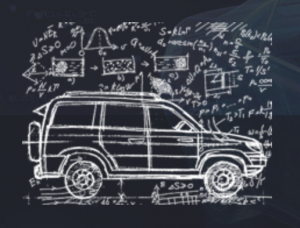
First came the concept: A vehicle that could drive itself without any human interaction.
Then came the legwork: How would it function? Where would designers place its cameras and sensors? Who would write the code enabling these vehicles to make split-second decisions to avoid a crash?
Many miles lie ahead on the road toward mainstream use of fully automated vehicles. The technology could save tens of thousands of lives every year, but it remains years (if not decades) from becoming a reality on the majority of streets and interstates in America. Innovation takes time to fine-tune, and it is reasonable to expect more adjustments along the way as miles driven lead to lessons learned.
In the meantime, several engineering issues must be addressed before fully automated vehicles replace driver-operated vehicles as the most common form of transportation.
“Seniors can keep their freedom even if they can’t keep their car keys. And drunk and distracted driving? History.”
-TIME.COM
Cameras and sensors are the eyes and ears in allowing fully automated vehicles to drive safely and effectively. Miniaturization, cost and accuracy are still being worked on. And what happens if snow, ice or mud blocks the sensors? Or if snow covers the lines of the road, which then could block the vehicle from identifying an upcoming curve or lanes merging or anything else?
Drivers know all too well the hazards of driving in snow and ice. Vehicle safety technology might change, but severe weather will remain, and one unresolved issue is how fully automated vehicles will operate safely when roads are snow-covered and visibility is at a premium. Likewise, redundancies will be necessary in case vandals damage or remove high-tech cameras and sensors belonging to new vehicles.
Poorly maintained roads, signs and lane markings, as well as construction zones, offer additional challenges for engineers to overcome before a high-level rollout of fully automated vehicles. A driver behind a steering wheel can identify orange cones and realize a lane is blocked off a half-mile in front of him or her. Sometimes, vehicles must veer on to the shoulder as they slowly pass by a construction zone. How can experts ensure that fully automated vehicles will be able to process the same type of information in the same way – or better?
Poor road maintenance opens the door to other potential complications with fully automated vehicles. Will these vehicles be able to safely avoid big potholes? What if signs, marking and striping are faded or missing entirely? The smooth pavement of testing tracks is far different than many deteriorating roads.
The first wave of fully automated vehicles is expected to be deployed in dense, urban environments such as San Francisco, New York City and Washington, D.C. Each city features high levels of traffic congestion, not to mention plenty of pedestrians and bicyclists. The driving experience can be very unpredictable.
In addition to unanticipated events, the sheer quantity of vehicles, pedestrians and objects increases the chances that a problem might arise. Traditional drivers and people on the street could lack the training and experience to know how a fully automated vehicle will behave and why.
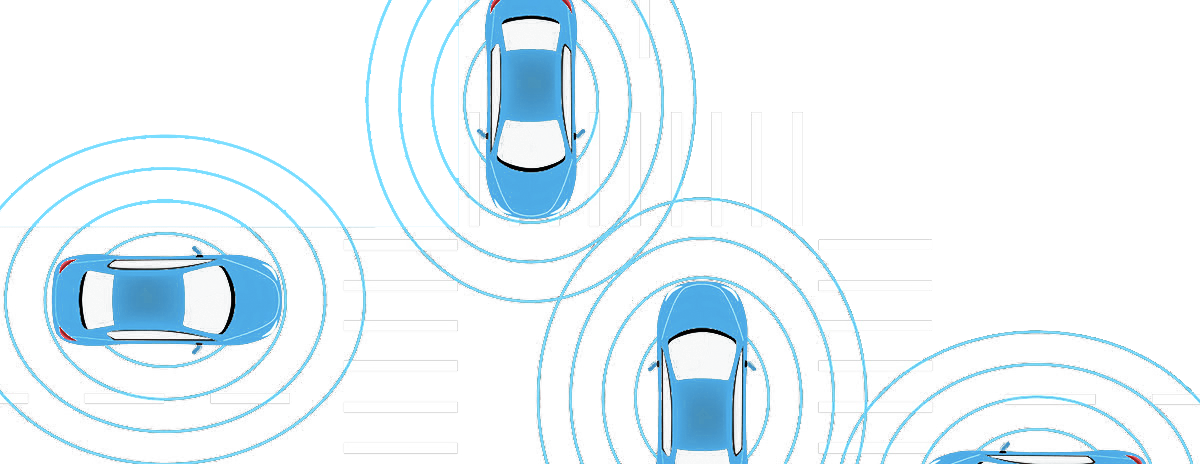
Fully automated vehicles may have the capability to communicate with other vehicles (commonly known as vehicle-to-vehicle, or “V2V” technology), infrastructure (“V2I”) and everything else in its path (“V2X”). But this communication system remains a work in progress during the testing stage of these vehicles.
Driver-operator vehicles currently are not equipped to communicate with fully automated vehicles. The new vehicles also could struggle to establish communication points with infrastructure, which lags behind in many areas and might prove to be particularly challenging in rural communities. The larger-scale V2X technology faces similar complications because not all systems will be equipped to receive and return information that is disseminated by vehicles.
The Federal Automated Vehicles Policy asserts that “the rise of new technology is inevitable” and emphasizes the importance of proper planning and follow-through to promote safety. Manufacturers and other stakeholders should follow a systems-engineering approach to help them design highly automated vehicle technology “free of unreasonable safety risks,” the document’s authors state. That means engineers must develop functions so that highly automated vehicles remain in a safe state in the event of electrical, electronic or mechanical malfunctions or software errors. Cybersecurity threats and vulnerabilities also must be considered during the design process. Meanwhile, as manufacturers race to develop and distribute highly automated vehicles, agencies such as the National Highway Traffic Safety Administration will benefit from hiring experts in science, engineering and mathematics to conduct pre-market testing on new technologies.
The policy says engineering and design safety considerations should include, but not be limited to, the following possibilities:

Software and hardware updates initiated by manufacturers could fall under government purview depending on the complexity of the updates, the document states. NHTSA would evaluate each highly automated vehicle system based on a 15-point “Safety Assessment” that covers areas such as data recording and sharing; privacy; system safety; human machine interface; post-crash behavior; object and event detection and response; and crashworthiness.
Engineers already have had a tremendous effect on vehicle safety technology, DOT says.
“New vehicle technologies developed in the 20th century – from seat belts to air bags to child seats – were once controversial,” the federal policy document states. “But after having saved hundreds of thousands of American lives, they are now considered indispensable. Advanced technologies developed in the first part of the 21st century – like automatic emergency braking and lane departure warnings – are already making U.S. roads safer. How many more lives might be saved today and in the future with highly automated vehicles?”
Content Source: MyCarDoesWhat.org
A reality check and the automated vehicles that are already on the road.
A quick survey of television and online news – CNN, CBS, FOX, The New York Times and others – allude to the promise that fully automated cars are just around the corner. Of course, the media likes a high-tech, futuristic story, but how real is it? When will the proverbial rubber of fully automated vehicles meet the road?
To be fair, there are cars on the road right now with automated features allowing them to steer, brake and accelerate automatically, but they still require a human behind the wheel. Test deployments are underway in Las Vegas, Maryland and Miami where an electric, driverless shuttle bus named Olli (localmotors.com/olli/) is operating on a fixed route. The French company NAVYA (navya.tech) operates a similar slow-moving vehicle in Europe, Australia and Las Vegas. Those highly specialized vehicles cannot handle all driving situations, and manufacturers disavow any claims of letting them perform self-driving tasks on public roads.

Are Silicon Valley, Wall Street and Detroit filling the public’s gas tank, but there’s nowhere to go? Has the hype sped past the reality? Let’s take a look.

Driver error represents the single most important issue in understanding car crashes. Organizations concerned with public safety are excited about automated vehicles because 94 percent of crashes are the result of human error. Automated cars don’t get distracted, don’t get drowsy, don’t speed, don’t have a third glass of chardonnay and they obey traffic laws. Other groups also eagerly await the era of automated vehicles — seniors and the disabled will be afforded a new level of independence.
Without a doubt, cars of all shapes, sizes and costs are hitching a ride on the car tech express. You need not spend $95,000 to enjoy cars that start themselves, stop themselves and monitor weather or local speed limits. Some even offer a 360-degree view while backing and alert you if you might be drowsy. There are more than 35 active safety features available which may help prevent a crash. These are cause for excitement. It’s estimated that one of those technologies, automatic emergency braking (to be included in most cars by 2022), will save thousands of lives. Many of these features are available at an affordable price.
Slow speed, fixed route, automated vehicles are here in the form of shuttles and people movers such as Olli by Local Motors.
Fully automated vehicles will be operating among us if you believe automakers and popular media. GM has proposed to deploy self-driving cars in 2019 as part of a ride-share service in a dense, urban market.
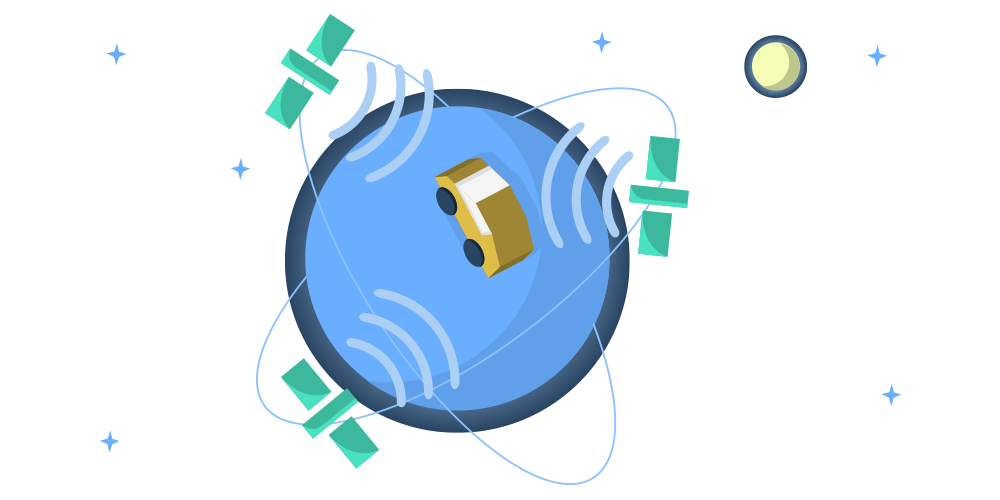
There will be great advancements, but many of us will still have our old, non-automated cars. The infrastructure and GPS network must be built and refined.
Cars are lasting longer, requiring 20-25 years just to replenish the fleet on the roads today. Just the transition period from getting older cars off the road could take a generation or two with lots of bumps along the road.
FOOTNOTE: Before we go further, let’s analyze the different names used for these vehicles of the future. Are they self-driving vehicles, driverless vehicles, autonomous vehicles, semi-autonomous vehicles or fully autonomous vehicles? How about none of the above? According to SAE, the Society of Automotive Engineers, these new cars are to be called “Fully Automated Vehicles.”
How could there be such a vast disparity regarding the timeline? Competing interests and venture capital could have something to do with it, not to mention geography. The federal government has set a policy hoping to avoid a national patchwork of laws and infrastructure for automation. Yet certain states or cities might have the will and the resources to adapt faster than other regions. Otherwise, a driver might be stuck with a car that drives itself perfectly in his or her own town or county, but leave that region, and the driver must revert to being a fully focused driver.
The “just a few years away” timeline could be justified if automated vehicles depended solely on onboard radar and sensors. But they don’t. Some experts feel that one car, no matter how smart, can’t be expected to do everything. So designers and governments must also focus on the surroundings and the ability of cars to speak to each other. This is known as “vehicle-to-infrastructure” and “vehicle-to-vehicle” communication – much like the radio transponder signals sent out by every plane in the sky. This will be costly and require great leaps for traffic and highway engineers. One of the biggest obstacles facing tech companies and car companies is the vast variety of driving environments: Cities, suburbs, rural, flat, hilly, snow, fog, paved, gravel. For automated vehicles, high-definition maps are a new kind of infrastructure that is not part of the traditional roadway environment. These “HD” maps allow the car to know precisely where it is with regard to lane position, intersections, curves, etc.
Car makers are racing to the future. Most are developing safety technologies that require very little driver input. Thousands of cars can automatically maintain a safe following distance with the car in front. Cars can steer, slow down and stop by themselves. They can help center you in the lane. But a safe, reliable car that can drive itself AND play nicely with everything else on the road does not yet exist outside of the testing environment. Training and education for drivers with these new features is limited. MyCarDoesWhat.org offers deep learning and quick tips about this new technology – a “learning bridge” to the future.
When will automated vehicles populate our roads? That is not an easy question to answer, but it’s safe to say that a wide-scale release of fully automated cars to the typical American driver is not just around the corner.
Content Source: MyCarDoesWhat.org
Shows you an expanded view of a lane beside you when you use your turn signal, or when you activate the feature manually.
This feature shares similar uses to blind spot monitors.
Turn this feature on by using the turn signal or pressing a button on the turn signal lever.
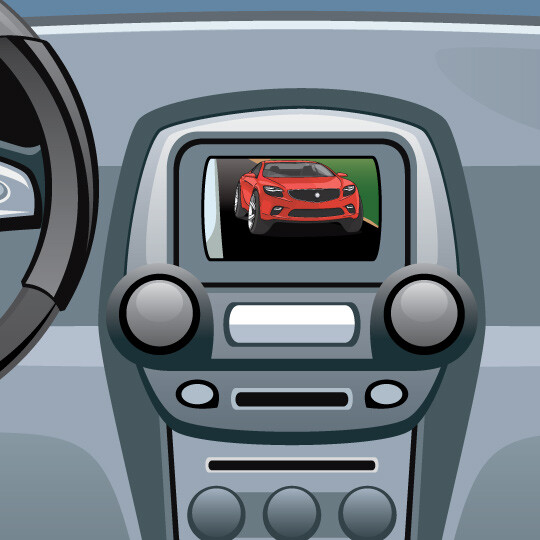
Look at the video display to see a view of the road on either side of your car.
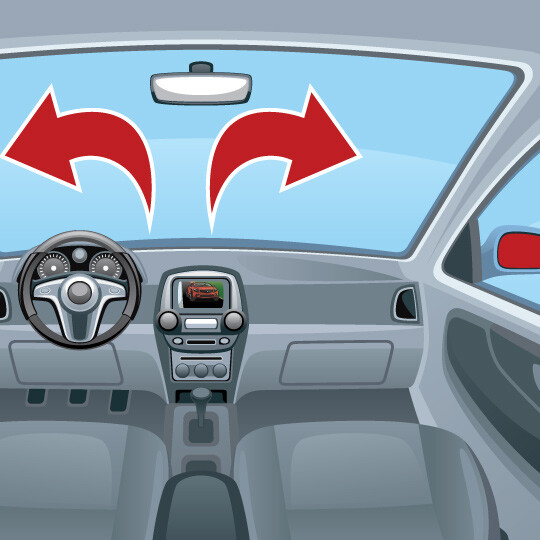
Always look over your shoulders and use side mirrors in addition to using this feature.
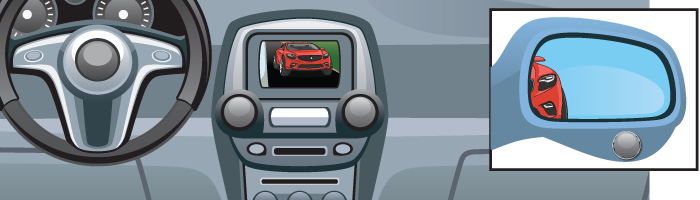
This feature shows you a video view of what is next to – or coming up alongside – your car.
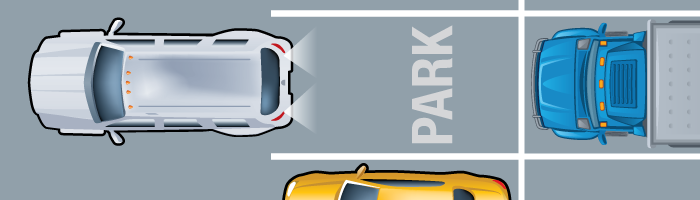
This feature improves passenger-side visibility – and in some cases, offers the driver a 360 degree view of the surrounding area of the car. You can use this feature to protect bumpers, side mirrors, trim and wheel rims from damage at slow speeds.
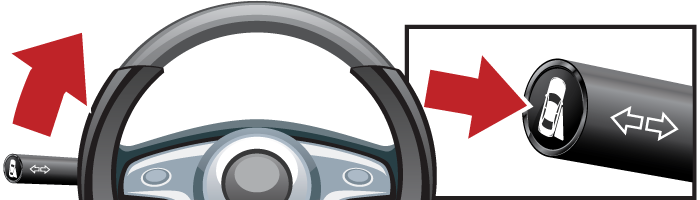
Use your turn signal, or activate the feature using a button usually located on your turn signal lever. If you want to use this feature while backing up, it may only turn on if you are going 3 to 7 miles per hour.
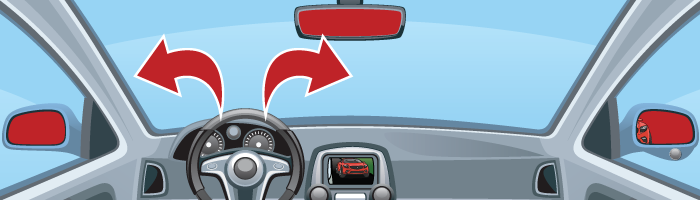
You should still check your mirrors and always look over both shoulders before changing lanes, parallel parking, making right turns, etc.
Depending on your car model, you may be able to see a view of the left-side and/or the right-side of your car when using your turn signal (or when activating the feature manually).
This feature is designed to activate when you use your turn signal. However, for most cars, you are free to turn on the sideview camera screen using a special button located on your turn signal lever. Check your car owner’s manual for more information on how to turn on this feature manually.
Content Source: MyCarDoesWhat.org
These features warn you of cars driving in your blind spots. They may provide an additional warning if you use your turn signal when there is a car next to you in another lane.
WHAT IT DOES: Uses a symbol, sound or vibration to let the driver know there are vehicles located in their blind spots.
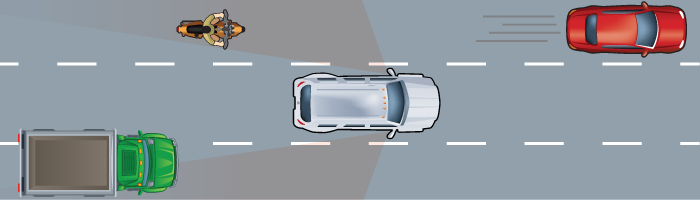
WHAT IT DOES NOT DO: May not detect motorcycles or very fast moving vehicles.
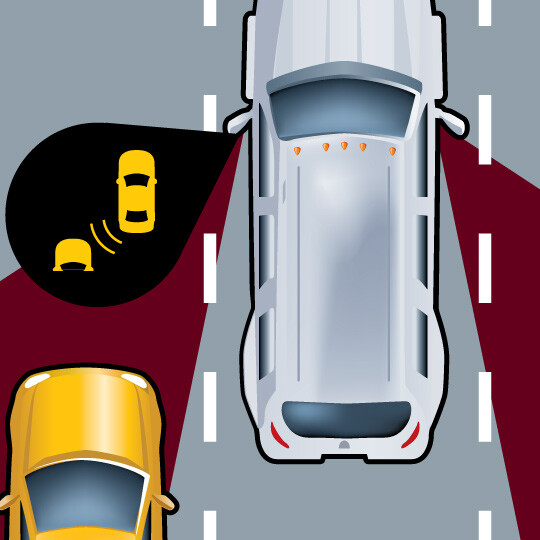
Watch for an alert if a vehicle enters your blind spot.
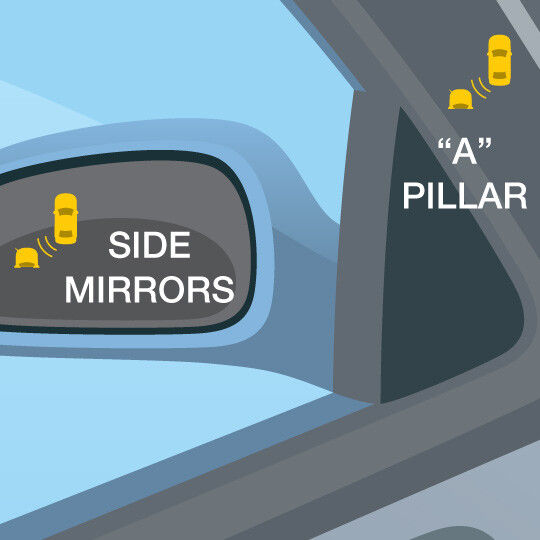
A warning icon lights up when there’s a car next to you. You may hear a warning or see a blinking icon if you engage your turn signal.
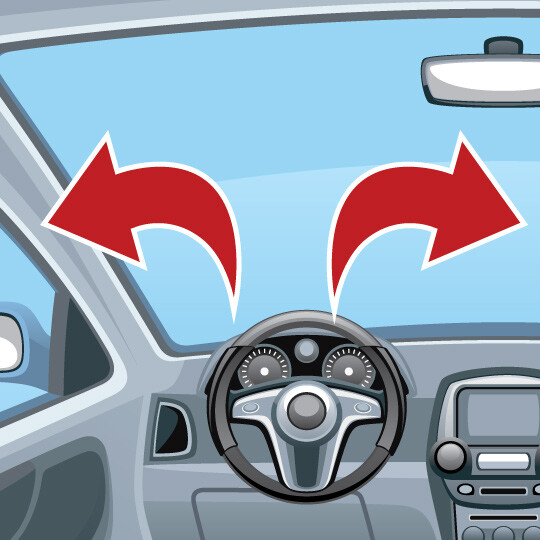
Remember to look over your shoulders and use turn signals before changing lanes.
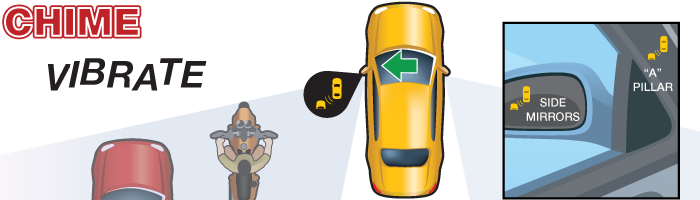
This feature will warn you if a car – or sometimes other objects – is in your left or right blind spot. Warnings will appear in your sideview mirrors or in the windshield frame. Some advanced versions of this feature may give you an audible warning (or other type of warning) if you use your turn signal and there is a vehicle in your blind spot.

This feature uses sensors that are always monitoring the road to your sides. They are optimized to work at highway speeds. Advanced features will work with your turn signal to provide you additional warnings if you attempt to change into a lane where another car is right next to yours.
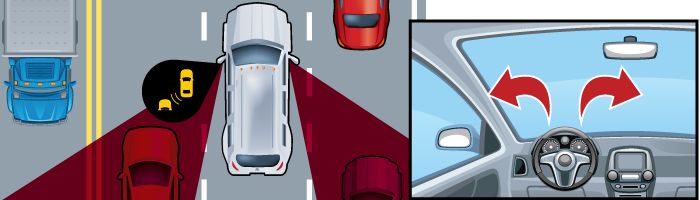
Use the blind spot warning to help you be more aware of other traffic as you travel down highways. You can also use the warnings provided by the blind spot warning when you want to make a lane change – but you should still always look over your shoulders before doing so.
Different manufacturers call this system different names. You may see it referred to as:
Blind spot warnings best detect other vehicles traveling beside your car. However, not all features may be capable of detecting motorcycles, bicycles and other vehicles smaller than a regular-sized car. You should always be aware of your surroundings and the traffic around you as you drive. Always remember to do a head check to confirm there is not a car in your blind spot.
Some blind spot warnings come with alerts that will provide you with additional warnings if you initiate your turn signal and there is already a car in the lane next to you. Check your owner’s manual or with your dealership to find out if your blind spot warning has this capability.
Content Source: MyCarDoesWhat.org
May gently steer you back into your lane if you begin to drift out of it.
WHAT IT DOES: Works to keep you in your lane. Easily cancelled by nudging the wheel.
WHAT IT DOES NOT DO: Will not work when lane lines are faint or covered with snow or dirt.
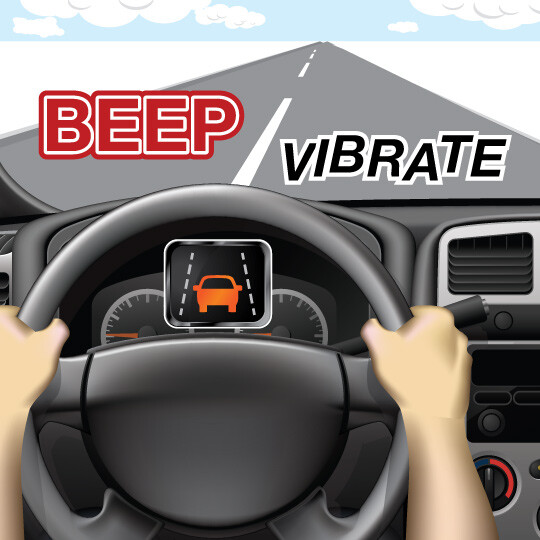
You may receive an alert – via a sound, flashing light or vibration – if you drift out of your lane.
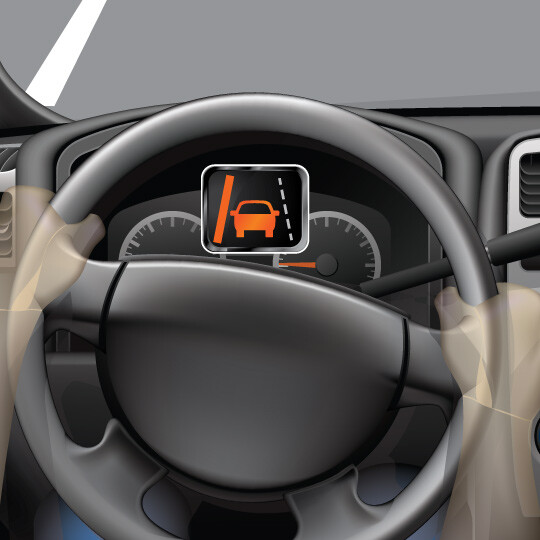
Return to your lane; if you don’t take action, this feature may gently steer you back to the center of the lane.
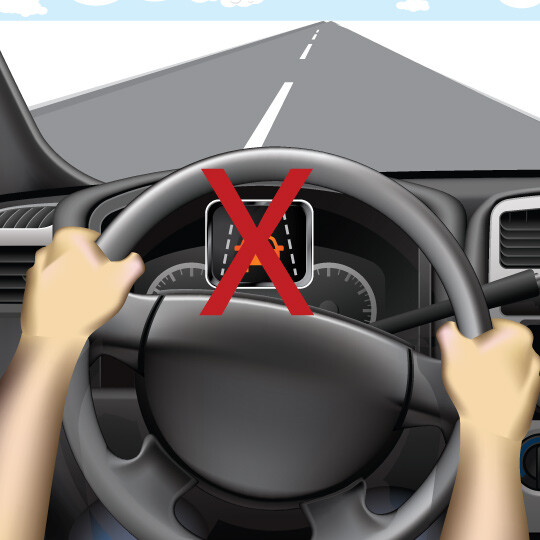
Slightly pulling the wheel will disable the lane keeping assist on most cars.
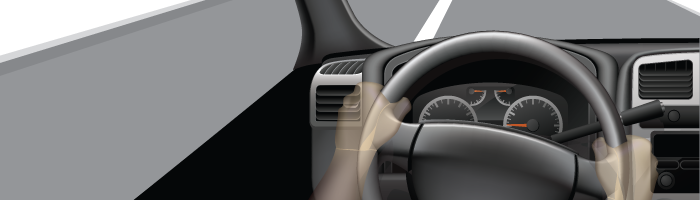
This feature can help return you to your lane if you drift out. This could help prevent a crash.
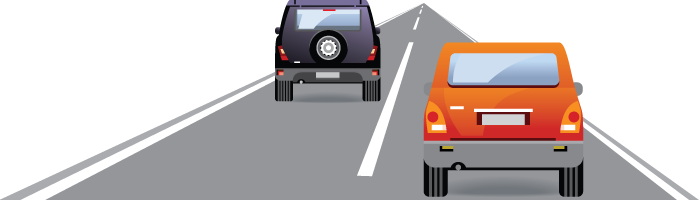
This feature relies on painted lane markings to operate. These include the markings between lanes and along the edges of the road. Some versions of this feature may also help prevent you from driving off the road.
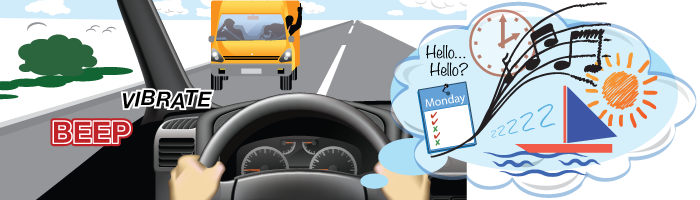
As you drive, always be aware of your surroundings and the traffic in the nearby lanes. However, if you do drift out of your lane, you’ll see a warning on your dashboard, hear a sound, or feel your seat or steering wheel vibrate. This is your lane departure warning activating. Then, if you don’t respond in time, lane keeping assist will gently steer for you, returning you to the center of the lane.
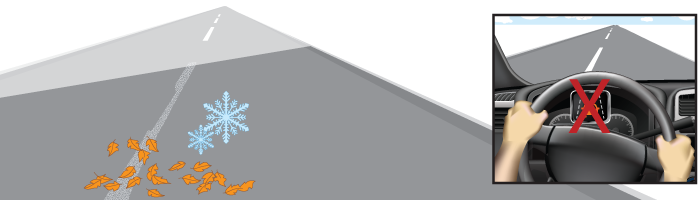
This feature will not work. Lane keeping assist relies on the lane departure warning feature, which reads lane markings, to determine if the car is leaving or has left the lane. If there are no lane markings or they are obscured, neither feature will function.
Lane departure warning and lane keeping assist must be able to read painted road markings. If these road markings are partially covered by snow, ice, leaves or mud, the lane departure warning and lane keeping assist will not function. Check your owner’s manual or ask your dealer about the limitations of this feature.
Content Source: MyCarDoesWhat.org



Warranties include 5-year/60,000 mile powertrain and 3-year/36,000 basic. All warranties and roadside assistance are limited. See retailer for warranty details.