Obstacles and opportunities on the road ahead
Self-Driving Cars and the Future of TransportationENGINEERING ISSUES
First came the concept: A vehicle that could drive itself without any human interaction.
Then came the legwork: How would it function? Where would designers place its cameras and sensors? Who would write the code enabling these vehicles to make split-second decisions to avoid a crash? Many miles lie ahead on the road toward mainstream use of fully automated vehicles. The technology could save tens of thousands of lives every year, but it remains years (if not decades) from becoming a reality on the majority of streets and interstates in America. Innovation takes time to fine-tune, and it is reasonable to expect more adjustments along the way as miles driven lead to lessons learned. In the meantime, several engineering issues must be addressed before fully automated vehicles replace driver-operated vehicles as the most common form of transportation.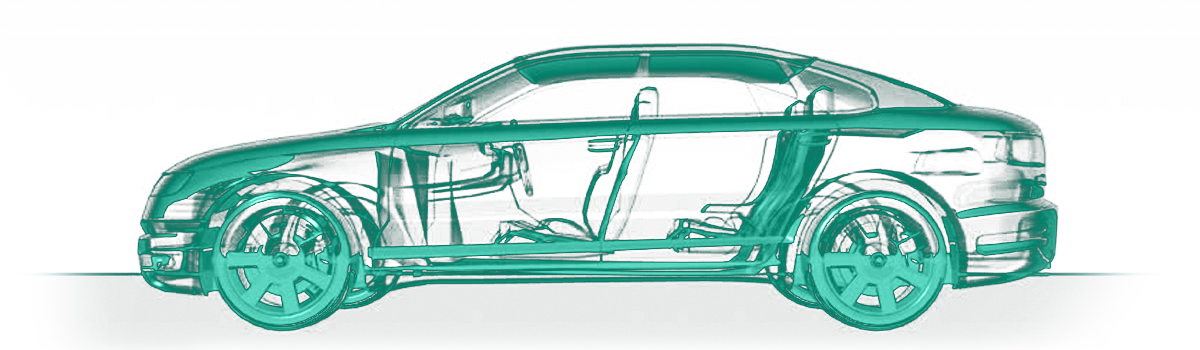
“Seniors can keep their freedom even if they can’t keep their car keys. And drunk and distracted driving? History.” -TIME.COM
Sensors
Cameras and sensors are the eyes and ears in allowing fully automated vehicles to drive safely and effectively. Miniaturization, cost and accuracy are still being worked on. And what happens if snow, ice or mud blocks the sensors? Or if snow covers the lines of the road, which then could block the vehicle from identifying an upcoming curve or lanes merging or anything else? Drivers know all too well the hazards of driving in snow and ice. Vehicle safety technology might change, but severe weather will remain, and one unresolved issue is how fully automated vehicles will operate safely when roads are snow-covered and visibility is at a premium. Likewise, redundancies will be necessary in case vandals damage or remove high-tech cameras and sensors belonging to new vehicles.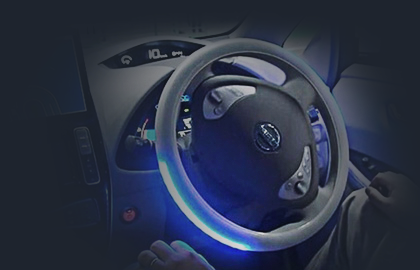
Infrastructure
Poorly maintained roads, signs and lane markings, as well as construction zones, offer additional challenges for engineers to overcome before a high-level rollout of fully automated vehicles. A driver behind a steering wheel can identify orange cones and realize a lane is blocked off a half-mile in front of him or her. Sometimes, vehicles must veer on to the shoulder as they slowly pass by a construction zone. How can experts ensure that fully automated vehicles will be able to process the same type of information in the same way – or better? Poor road maintenance opens the door to other potential complications with fully automated vehicles. Will these vehicles be able to safely avoid big potholes? What if signs, marking and striping are faded or missing entirely? The smooth pavement of testing tracks is far different than many deteriorating roads.Urban environments
The first wave of fully automated vehicles is expected to be deployed in dense, urban environments such as San Francisco, New York City and Washington, D.C. Each city features high levels of traffic congestion, not to mention plenty of pedestrians and bicyclists. The driving experience can be very unpredictable. In addition to unanticipated events, the sheer quantity of vehicles, pedestrians and objects increases the chances that a problem might arise. Traditional drivers and people on the street could lack the training and experience to know how a fully automated vehicle will behave and why.Connectivity
Fully automated vehicles may have the capability to communicate with other vehicles (commonly known as vehicle-to-vehicle, or “V2V” technology), infrastructure (“V2I”) and everything else in its path (“V2X”). But this communication system remains a work in progress during the testing stage of these vehicles. Driver-operator vehicles currently are not equipped to communicate with fully automated vehicles. The new vehicles also could struggle to establish communication points with infrastructure, which lags behind in many areas and might prove to be particularly challenging in rural communities. The larger-scale V2X technology faces similar complications because not all systems will be equipped to receive and return information that is disseminated by vehicles.NEW TECHNOLOGY IS INEVITABLE
- Actuator, sensor and communication failure
- Software errors
- Inadequate control and undesirable control actions
- Collisions with environmental objects and occupants on the road
- Collisions that could be caused by the vehicle system
- Leaving the roadway
- Loss of traction or stability
- Violations of traffic laws and or variance from expected driving methods