
New breed. New Era. Introducing the all-electric #MustangMachE.* Reserve your Mustang Mach-E here: https://ford.to/mustangMachE *By completing the reservation process, you are not ordering or purchasing a vehicle. Terms and conditions apply. Vehicle available late 2020.
New Breed: Introducing the Ford Mustang Mach-E
The wait is over. Introducing the all-electric Mustang Mach-E. The all-new, Mustang inspired, fully electric performance utility vehicle has a targeted EPA-estimated range of 300 miles with an Extended range battery and RWD.* The 2021 Mustang Mach-E is targeting 0-60 in under a 4 second range when equipped on the GT with extended battery and AWD.** Reserve your Mustang Mach-E here: https://ford.to/mustangMachE By completing the reservation process, you are not ordering or purchasing a vehicle. Terms and conditions apply. Vehicle available late 2020. *Based on full charge. Targeted range applies to an available configuration. Actual range varies with conditions such as external elements, driving behaviors, vehicle maintenance, and lithiumion battery age. Final EPA-estimated ratings available in the 2020 calendar year. **Based on manufacturer calculation using computer engineering simulations. Your results may vary. Discover more Ford Mustang Mach-E videos here: https://ford.to/2OeJv2m
Ford's New Mustang Inspired EV SUV Is Almost Here. Are You Ready?
IT’S ALMOST TIME Be one of the first to experience it. Tune in to Ford's reveal livestream on Sunday, November 17, 2019. Details coming soon. Read here: https://ford.to/2PSRepb At Gilbert & Baugh Ford in Albertville, Alabama Fords REALLY do cost less. Come see the difference.
The F-150 is Dependable, Tough, and Consistent
The F-150 is dependable, tough, and consistent that's why it dominates the competition. These are the same principles that Coach John Grass coaches by. That's why it's the official truck of Jacksonville State Football. Get 0% financing for 72 months or up to $11,500 off of select Ford F-150's. If you're looking for a truck as tough as you are, come see the difference at Gilbert & Baugh Ford in Albertville where Fords REALLY do cost less. At Gilbert & Baugh Ford in Albertville, Alabama Fords REALLY do cost less. Come see the difference. 15-second commercial below:
Helping older drivers stay safe
Helping older drivers stay safe Vehicle safety technology is advancing fast, so we hope you keep coming back to stay on top of the latest developments. In a complex subject, we have a simple goal. We want to help you stay safe on the road. If you watch the video below, we want to know: Does Charlie’s story sound familiar? Charlie is an aging driver who is not as nimble as he used to be. Twisting and turning his body to see what’s behind him is difficult. It’s harder to see at night. His reaction time has slowed. Maybe he sounds like an older relative. Maybe he sounds like yourself. Twenty years ago, Charlie might have had to give up driving because of his physical limitations. Ten years ago – even five years ago – the same result might have been true. But now, thanks to vehicle safety technology, people such as Charlie are able to keep driving safely. Newer features such as backup cameras, blind-spot warning, automatic emergency braking and lane departure warning all serve to assist him with his driving task. It’s important to make a quick distinction: These are assistive technologies. They do not replace the driver. Charlie still must pay attention every time he is behind the wheel (repeat: every time), and these features will help him to see more and understand the driving environment better. At MyCarDoesWhat.org, we work hard to inform drivers about how these safety features work. We want to make sure you are equipped with the knowledge to use these assistive technologies so that you stay safe on the road. So if you know an older driver – of if you are that older driver – we hope you can share the video about Charlie’s story. And when you share it, we hope you can encourage others to visit our site and explore the safety features that we cover in great detail. Thanks from all of us at MyCarDoesWhat.org. Know more. Drive safer. Longer.
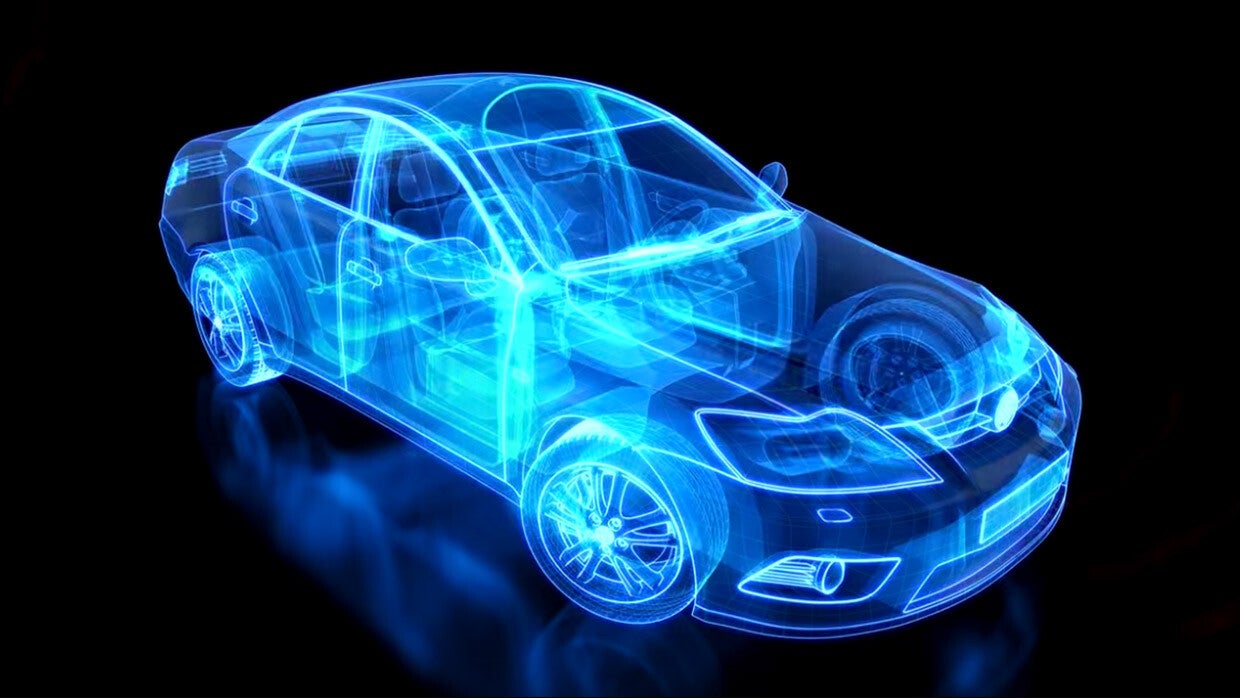
Automated Vehicles Meet Human Drivers
Automated Vehicles Meet Human Drivers It is almost impossible to keep up with daily advances in the field of motor vehicle automation. So when a new excellent summary is published, composed of facts and not marketing hype, along with well thought-out suggestions, it is worthy of a look. What makes the Autonomous Vehicles Meet Human Drivers: Traffic Safety Issues for States report by noted vehicle safety expert Dr. James Hedlund, authored for the Governors Highway Safety Association, so important is that it was both collaborative and designed to be useful – a potential additional roadmap for the future. And what does the report remind us? Partially automated and fully automated vehicles are still very much in the testing phase, and none are yet offered for sale to the public. They probably won’t be for a while. According to the most aggressive timelines it will probably be 5 to 10 years before they are offered to the first buyers – expected to be fleet operators who will run these in limited “geo-fenced” areas. While that may seem like a long time (or short time – depending on your point of view), there is lots to do for state DOTs, DMVs and law enforcement to do to get ready. This report will help them prepare. One key perspective is that guidance is needed from national organizations to advance model state laws, regulations and policies. This may seem counter-intuitive. Stronger guidance on the national level is not always encouraged by local jurisdictions. However, in this instance, it seems that states, who might not have the expertise to develop these on their own and the auto and tech industry, who don’t want to build individual vehicles for individual states to comply with their individual rules – all appear to have a common goal of preventing a patchwork approach to this national issue. Another key perspective is that traffic safety issues need to be documented as these technologies are rolled out. One sure way to document risks is to share non-identifiable usage and crash data. Only if that occurs can we understand whether these technologies are delivering on their promise to eliminate the needless death of more than 100 people a day currently lost on our roadways. And education is recognized as a critical component of the introduction of these vehicles. Drivers of partially automated vehicles and fully automated vehicles will need to know the limits and extent of their driving responsibilities. And those who never intend to acquire a vehicle that has a higher level of automation, as well as the rest of the motorcycling, bicycling and walking public, will need to know how to share the road safely with these automated vehicles. That is one of the reasons we created MyCarDoesWhat. It gives visitors an introduction to the technologies that help comprise partially and fully automated vehicles. Because now, and for the foreseeable future, no matter how advanced our vehicle automation systems become, the key ingredient will still be, as it always has, an active, engaged driver. Read more about Au tonomous Vehicles Meet Human Drivers: Traffic Safety Issues for States at GHSA.org. Content Source: MyCarDoesWhat.org
Technology in Today’s Vehicles – How to Keep your Teen Safe
Consider a car that includes safety features which could help avoid or mitigate a crash. Jacob Smith is a transportation safety program manager at the National Safety Council. Back-up cameras, blind spot monitoring, and cruise control, oh my! With the evolution of automated safety technologies in today’s vehicles and the prospect of futuristic, fully autonomous vehicles always in the news, it may seem frightening to allow your teen to drive in a newer vehicle. You are not alone. Today, at least one Advanced Driver Assistance Systems (ADAS) feature is available on over 90% of new vehicles in the U.S. These features – also known as collision avoidance technologies – deliver great safety benefits to help save lives and prevent injuries. Still, parental attitudes are key to teens’ acceptance and use of these safety technologies. You must clearly communicate that your teen driver should use these safety features as an “assistance” to driving, and not become reliant on them. Here are five tips to relieve your anxiety and keep your teen safe by taking advantage of these life-saving technologies. Many car safety features vary by manufacturer, from their functions to even their names. Check out MyCarDoesWhat.org for exact information on features that are available on your vehicle and tips to ensure your teen driver is properly educated. Not all Automatic Emergency Braking features can bring your car to a full stop. Check your owner’s manual with your teen for specific details and talk through what the car can and cannot do. Back-up cameras provide an extra set of eyes. After you shift into reverse, this feature activates to show your teen driver what (or who) is behind the car. Depending on the vehicle, the display may be found on the center console, rearview mirror or sun visor. Show your teen how to use it on your next practice drive but teach them to still turn their head and check for other obstacles the camera might not catch. Situational awareness is often a huge hindrance with teen drivers. Specifically, teens may not always remember to check their blind spots, but blind spot monitoring can give them an extra tool to help them see other cars in these dangerous areas. Your teen driver may not always remember to reduce their speed when taking an exit. Curve speed warnings are a great feature to track the car’s speed and location, warning the driver to slow down ahead of curves. Above all, make safety a priority. Instead of automatically passing down an older or cheaper vehicle to your teen driver, consider a car that includes safety features which could help avoid or mitigate a crash. With ADAS support, your teen driver can have a safer journey to their destination. Content Source: National Safety Council
Vehicle safety features can help protect teen drivers
Vehicle safety features can help protect teen drivers Here’s a fact that should cause outrage: Car crashes are the No. 1 killer of teenagers. These young men and women never get to reach their prime. They never get to buy a house, raise a family or build a career. Instead, they are killed right as their adult lives are getting started. Every single one of these deaths is preventable. It is easy to feel hopeless about this reality. But that does not accomplish anything. It is better to channel those emotions into outrage — and action — by discovering ways to prevent the next tragedy from ever happening. This is National Teen Driver Safety Week, a perfect time to come together to help the next generation stay safe on the road. The obvious steps include talking with your teen driver and making sure that he or she has the proper training and education whenever they are behind the wheel. Visit https://www.nsc.org/driveithome for all kinds of important tips in this area. But another important piece, and one that hits home for the team at My Car Does What, is turning to advanced safety technology as a possible solution in the fight against teen driver fatalities. Oftentimes, teenagers drive older, cheaper vehicles. The logic is simple: They’re inexperienced drivers. They might get into a crash or beat up the vehicle with hard use. Better to damage a cheaper vehicle than a newer, more valuable vehicle. But is that the safest approach? Newer vehicles have safety technologies such as backup cameras, blind spot monitoring, lane departure warning, collision avoidance systems and other features that can prevent crashes and save lives. In many ways, our teenagers are the ones who can benefit most from these technologies because they do not have as much experience in everyday driving situations. So warn your teen about the dangers of impairment, distraction and speeding. But also let them know about the safety technologies that can help them. Visit our main page for a list of all available safety technologies. It’s also important to let your teen know that these technologies assist the driver, they do not replace the driver. We are not at the stage yet where vehicles drive themselves. A driver must be an alert and attentive at all times, even if his or her vehicle is equipped with lane keeping assist or other helpful features. Lastly, check out NSC’s DriveItHome page for the latest news on keeping your teen safe on the road. Please pass this along to any parents, teachers or coworkers who have young drivers in their lives: National Safety Council
Where we are right now in automation... vs. the future
Where we are right now in automation... vs. the future Self-driving Cars and the Future of Transportation. WILL I EVER OWN A FULLY AUTOMATED VEHICLE? The leap to owning a fully automated vehicle will not be like the leap from horse and buggies to “tin lizzies.” Many estimates predict that we will see fully automated vehicles in the next couple of years. But whether the average person will be able to afford one or want to drive one is another question. The likely first purchasers of these vehicles may be fleet operators that buy vehicles in bulk quantity. A car rental company might, for example, have “geo-fenced” cars that might serve the metropolitan area around an airport and go no farther. Rideshare companies such as Uber are already experimenting with fully automated vehicles and may render that chatty, affable driver a thing of the past. In this article, we look at some of the resistance to assistive technologies that may exist. CAN FEAR OF ASSISTIVE TECHNOLOGIES BE OVERCOME? Recent surveys show that the majority of people have concerns about the safety of self-driving cars, ranging from moderately concerned to downright frightened. There are few who say they have complete confidence in fully automated vehicles. WHO’S AFRAID OF A FULLY AUTOMATED CAR? According to a survey conducted by AAA, three quarters of U.S. drivers would be afraid to drive in a fully automated car. AAA’s survey said that women and people over age 55 fear it the most. A University of Michigan study showed that, “In comparison to the respondents in the U.K. and Australia, respondents in the U.S. expressed greater concern about riding in self-driving vehicles, data privacy, interacting with non-self-driving vehicles, self-driving vehicles not driving as well as human drivers in general, and riding in a self-driving vehicle with no driver controls available.” HOW SOON WILL WE SEE THEM? Is resistance futile? According to some projections, fully automated cars will be common in 20 years. In a controlled experiment, a partially automated beer truck made a delivery without a driver behind the wheel for the highway portion of the trip. Once the beer truck entered the city, a truck driver took over driving duties. But will fully automated cars erode the aspirational driver experience on which so much of car marketing is based? There was a scare a few years back when a University of Michigan study showed that fewer younger people were getting licenses. Fewer drivers mean fewer car purchases. But that proved to be a temporary phenomenon as millennials were second only to boomers with 4 million cars purchased in 2015. Whether or not America’s love affair with the automobile is the product of strong marketing, the next generation of drivers may be more concerned about what they can do with the extra time they’d have if they don’t have to pay attention to the road. The conventional wisdom has been that younger consumers are more comfortable with new technology. A study by Volkswagen in Germany showed that people quickly became more comfortable with “robot cars” after they had a chance to spend some time in one. So barring a calamity, people eventually may embrace assistive technologies. And even those people who simply like to drive will breathe a sigh of relief knowing that they can take the wheel anytime they like. However, our notion of who is driving whom becomes more in question in highly automated vehicles. So here are some of the questions that drivers are asking and engineers are attempting to answer: Can a fully automated vehicle be hacked? Right now? Yes. It has been demonstrated that the sensors on even the most advanced assistive technology-equipped vehicles can be fooled cheaply and readily by a motivated tinkerer. Recently, two “white-hat hackers” (professionals who hack to expose weaknesses) took complete control of a Jeep Cherokee’s UConnect System, “which controls everything from the navigation system to a driver’s ability to make calls.” Although the car manufacturer addressed the vulnerabilities, this could become a greater problem as more vehicles have outside digital connections. What about getting personal information about me from my fully automated car? While the fully automated car will know your home and work locations, credit card information and recent locations, it may not be able to share that information with a hacker if it isn’t online. Will I need a license for a fully automated vehicle? Yes. Under current regulations, highly automated vehicles still require a human driver to be at the ready. So, we’re still a long way from piling a group of children into a fully automated vehicle and sending them off to a little league game. It is unclear, at this point, if the vehicle itself, will require a license. Stay tuned… Will I need insurance? If regulations of fully automated cars in the future require a human driver to be present, he or she will probably need insurance. Furthermore, as seen in the case of a fatal Tesla crash, a driver can still be at fault even though the partially automated vehicle was doing the driving. But the good news is that your insurance rates should go down and as collisions decrease. Fully automated cars present a legal dilemma for the insurance industry and manufacturers, according to a paper by Bryant Walker-Smith. The safer a car is, the more it will cost to manufacture and insure. On the other hand, fully automated vehicles should reduce the number of collisions and the costs to insurance companies. Will my fully automated vehicle be able to communicate with other fully automated vehicles? V2V, or vehicle to vehicle communication, will help to relay information about traffic jams or obstacles to other vehicles, possibly making traffic flow more efficiently. V2I, or vehicle-to-infrastructure systems, can allow cars to speak to traffic lights, for example, in order to know when the light is going to change. Of course, in a future with a mix of vehicles, there will be the wild card of the unpredictable or reckless driver. Is there any kind of redundancy in the vehicle’s sensors? Yes. One example: the fully automated car Uber is testing has 20 cameras and multiple radar sensors to “see” in every direction around the vehicle. The sensor technology includes LIDAR, radar and cameras. This should provide some relief to those who worry that a stray piece of gravel on the highway might knock out a sensor. Content Source: MyCarDoesWhat.org
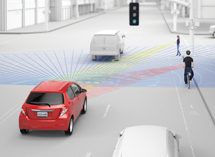
Safety Benefits of Advanced Driver Assistance Systems
Safety Benefits How will automation protect vehicle occupants? ADVANCED DRIVER ASSISTANCE SYSTEMS The ultimate safety benefit of advanced driver assistance systems (ADAS) is simple: Lives will be saved, injuries will be prevented and lessened, and crashes will be reduced. As many as 40,000 people died on U.S. roadways in 2016 alone, according to preliminary data from the National Safety Council. Approximately 94 percent of those deaths were the result of human error. Improved technology means opportunities for human error will continue to decrease, thus saving lives and preventing injuries. How exactly will ADAS technologies improve safety? The answer depends on the specific system, but vehicle safety technologies serve three primary functions: Aid Warn Assist Systems that aid Systems that aid drivers include back-up cameras and adaptive headlights. These features improve visibility for drivers and show hazards in otherwise hard-to-see areas around a vehicle. The images are captured by cameras and sensors. These technologies already exist in many vehicles and soon will be a standard feature on all cars. Warning Features Warning Features do just that: Warn the driver about hazards that might be in their path. Examples include forward collision warning, lane departure warning, blind spot detection and drowsy driver detection systems. Warnings are relayed to drivers through audible alerts or vibrations. Hazards are most often detected through the use of cameras and radar sensors. Assist technologies Assist technologies take on a more active role to help the driver. Some of the assist features include automatic emergency braking, lane keeping assist, adaptive cruise control (a version of cruise control that maintains your speed and set following distance) and automatic parallel or perpendicular parking. Cameras and radar sensors all help make these technologies possible. However, it is important to note that these features do not replace the role of the person behind the wheel. An attentive, defensive driver remains a necessary component of all vehicles featuring ADAS technologies. A study published in 2016 in the journal Accident Analysis and Prevention says the safety benefits of ADAS technologies will be significant. Researchers determined that if every car were equipped with blind-spot monitoring, lane departure warnings and forward collision warnings, the technologies “could prevent or reduce the severity of as many as 1.3 million crashes annually, including 133,000 injury crashes and 10,100 fatal crashes.” Drivers whose vehicles have ADAS technology stand to benefit from improved visibility, better advance warnings, the ability for a vehicle to take control in an emergency situation, and more comprehensive tools for driving in bad weather or poor road conditions. The Insurance Institute for Highway Safety also expects significant safety benefits because of ADAS technologies. An IIHS study from 2016 found that back-up cameras reduced backing crashes by 16 percent and particularly benefited drivers age 70 and older. Content Source: MyCarDoesWhat.org

Points to Ponder About Self-Driving Vehicles
Points to Ponder Safety technologies exist, but attentive drivers still necessary ADVANCED DRIVER ASSISTANCE SYSTEMS In advanced driver assistance systems, or ADAS, the key word is “assistance.” Many ADAS technologies are here right now, and they exist in everyday, affordable cars on the market. However, it is important to remember that today’s technologies are assistive and cannot be considered as a safe replacement for a human driver. There is no fully automated vehicle on the road today that members of the public can drive – even those in testing have safety drivers that may take over. At least for now, fully automated vehicles remain in the testing stage confined to specific environments. Much more common today are systems that watch out for you. That means you can drive a car with ADAS features that help keep you in your lane (e.g., lane keeping assist), forward collision warning or automatic emergency braking that help prevent rear-end collisions. These technologies exist to assist you, so you must be an alert, attentive driver whenever you are on the road. Not all advanced vehicle safety technologies are created equal. Some ADAS features provide a greater safety benefit than others. The most valuable technologies include automatic emergency braking, forward collision warning, lane departure warning, blind spot warning and adaptive headlights, according to an analysis from the Insurance Institute for Highway Safety. If those four features existed in every car, more than 10,000 lives could be saved and almost 150,000 injuries could be prevented every year, the organization states. Names and icons for car safety features might vary. Car manufacturers implement safety technologies in different ways. They also name these technologies differently. For instance, the driver of one vehicle brand might know automatic emergency braking technology as “Forward Emergency Braking.” But a driver of another vehicle brand might know the technology as a “Collision Mitigation Braking System.” Likewise, dashboard icons for the same function may differ depending on the car. Both the Society of Automotive Engineers and the National Highway Traffic Safety Administration provide standards and regulations with regard to auto safety.

Timeline of Vehicle Safety Technology Through The Years
Timeline Vehicle safety technology: Through the years Download a PDF of the Safety Features Timeline Download a PDF of the Safety Features Timeline Content Source: MyCarDoesWhat.org

Warranties include 5-year/60,000 mile powertrain and 3-year/36,000 basic. All warranties and roadside assistance are limited. See retailer for warranty details.